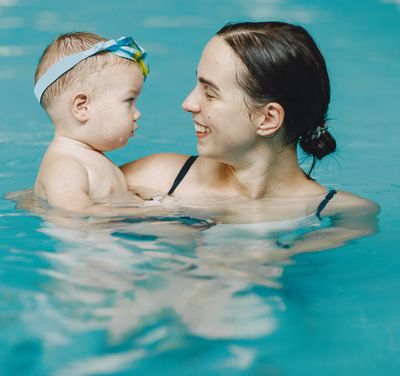
Swimming is a valuable life skill, and many parents choose to introduce their infants to the water at an early age. Infant swim lessons are not only about acquiring swimming techniques but also about developing comfort, confidence, and safety in and around the water. Lessons will be structured as follows and tailored for each infant’s comfort level. Parent participation in the pool is optional.
Water Comfort & Adjustment
· Comfort with entering the water (held by parent or instructor)
· Relaxation in the water (body and face expressions)
· Comfort with water being poured over head and body
· Willingness to kick or move arms in water
· Enjoyment during floating (back and tummy, supported)
Breath Control
· Response to water on face (stay calm, no crying)
· Ability to blow bubbles (mouth in water)
· Attempt to hold breath when gently lowered under water (very brief, always in instructor’s arms)
· Recovering breath after submersion (calmness, no distress)
Body Position & Movement
· Holding a supported front float position
· Holding a supported back float position
· Head alignment (ears in water, chin in neutral position)
· Leg kicking (with or without assistance)
· Arm movement/splashing (with or without assistance)
Water Safety Skills
· Understanding and responding to safety cues (e.g., “Ready, Set, Go!”)
· Gripping the pool edge (with support)
· Turning toward parent/instructor after brief submersion
· Reaching for toys at the water’s edge (while supported)
· Closing mouth and eyes when water splashes face
Parent/Infant Interaction
· Willingness to separate from parent (if appropriate)
· Responding to parent/instructor encouragement
· Initiating eye contact and smiling during lesson
· Participation in song or game activities in water
· Comfort with other infants in the water
Progress Over Time
· Improvement in comfort level since previous lesson
· Improvement in breath control
· Improvement in floating and body position
· Improvement in safety responses
· Overall enjoyment of lessons